
Karen Hao: Investigative AI Journalist

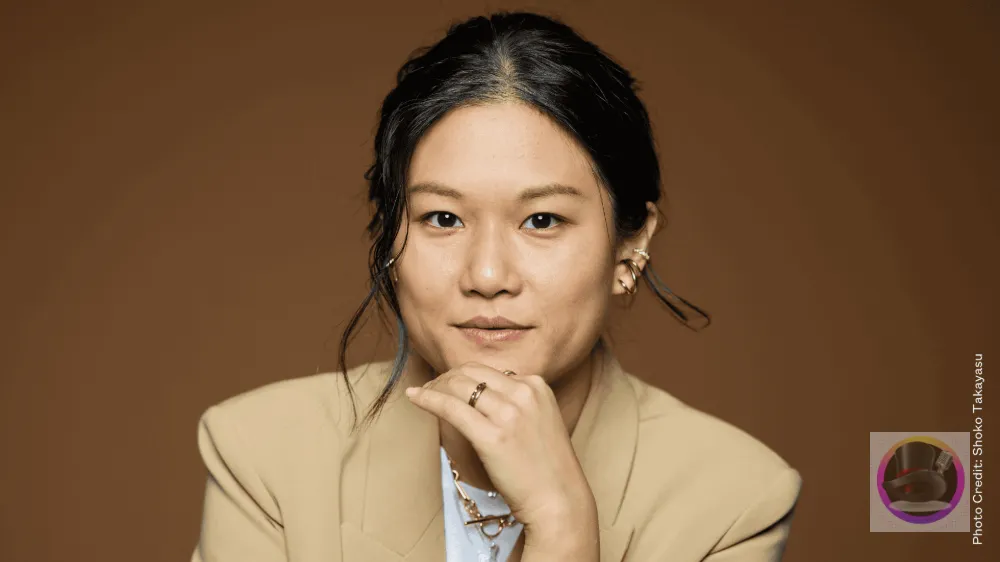
Karen Hao is a globally recognized AI journalist and investigative author who exposes the forces shaping artificial intelligence and empowers audiences to build a fairer, more democratic technological future.
Quick Facts:

Highlights:
  • Named one of TIME’s 100 most influential people in AI
  • Former Silicon Valley engineer with deep technical and investigative expertise
  • Author of the bestselling Empire of AI (Penguin Press, 2025)
  • Years of exclusive reporting on OpenAI and global field investigations

Formats: Keynote speaker, investigative author, AI ethics commentator

Audiences: Policy leaders, executives, technologists, researchers, educators, and organizations seeking clarity on AI’s risks, opportunities, and governance challenges

Outcomes:
  1. Clear frameworks for evaluating AI’s societal impact and governance gaps.
  2. Deeper understanding of the political, economic, and ethical forces shaping AI.
  3. Actionable guidance on building accountable, democratic, and human-centered technological futures.
Reading time: 1 min
Reviews: (0 reviews)
  • Travels from: Hong Kong
  • **Fee range: $50,001 - $75,000

Talent Services

Keynote Topics:

Generative AI and ChatGPT

In this time of technological and political upheaval, we must re-evaluate the way that we talk about and embrace AI—especially generative models like ChatGPT, and Artificial General Intelligence. Many of the ways that society could benefit from AI—better education and healthcare, a faster transition to renewables, clean air and clean water—have nothing to do with AI models today; they are based on the machine-learning models that have come before. But Silicon Valley, with OpenAI at its helm, has woven a remarkably compelling narrative about generative AI and Artificial General Intelligence being the key to progress and abundance.

This narrative cloaks what’s happening beneath the surface, says Karen Hao. In this timely talk, drawing on years of original research, she examines a growing body of evidence to ask whether AI will ever produce broad-based economic benefit. Companies like OpenAI have become empires in the full sense of the word, consolidating extraordinary power and wealth in the hands of the few.

In this historic moment, she shows us, the threat of the empires of AI grows clearer by the day. A return to empire is the unraveling of democracy. But there is another viable path. Karen offers an ultimately realistic and hopeful look at how to wrestle back what we’ve already lost, in order to create a world we all want.

Talent Short Bio

Karen Hao is an internationally respected AI reporter and investigative journalist known for her deeply researched, globally informed analysis of artificial intelligence and its societal impact. Widely regarded as one of the leading voices in the field, she was named one of TIME’s 100 most influential people in AI and praised by Dr. Joy Buolamwini as “one of the foremost tech journalists covering AI.” Before entering journalism, Karen worked as an engineer in Silicon Valley, giving her both technical fluency and insider context that shape her reporting.

She is the author of the New York Times bestselling book Empire of AI: Dreams and Nightmares in Sam Altman’s OpenAI (Penguin Press, 2025), an investigative exposé that uncovers the power struggles, ethical tradeoffs, and global implications behind one of the world’s most influential technology institutions. Her work spans years of exclusive reporting on OpenAI and field investigations across five continents, offering audiences unparalleled insight into how AI is transforming governance, labor, human rights, and geopolitical dynamics.

In her keynotes, Karen delivers a clear-eyed assessment of the technology’s risks and opportunities. Her message extends beyond critique; she equips audiences with the frameworks, questions, and agency needed to influence AI’s trajectory

Karen Hao is a globally recognized voice at the forefront of AI reporting, named one of TIME’s 100 most influential people in AI and heralded as “one of the foremost tech journalists covering AI” by Dr. Joy Buolamwini. A former Silicon Valley engineer turned investigative journalist, Karen is the author of the New York Times bestselling book Empire of AI: Dreams and Nightmares in Sam Altman’s OpenAI (Penguin Press, 2025) a groundbreaking exposé that unpacks the world’s most consequential tech power struggle.

In her compelling keynote presentations, Karen Hao offers audiences an unflinching look at how artificial intelligence is rapidly reshaping our societies from governance and labor to human rights and global power. Drawing from years of exclusive reporting on OpenAI and extensive fieldwork across five continents, she presents not just a chronicle of AI’s evolution, but a wake-up call about its potential consequences.

But her message is not just about warning, it’s about agency. Karen Hao empowers audiences to engage critically with technology and shows how citizens, leaders, and organizations can help steer AI toward a fairer, more democratic future. “The way we develop technology is now fundamentally broken,” she says. “But I truly believe that we can fix it.”

View further Artificial Intelligence speakers and follow us on LinkedIn

Talent Videos

Why We Need To Democratise How We Build AI | Karen Hao | TEDxGateway

An eleven minute TEDx talk where Karen Hao reveals why today’s AI development pipeline is fundamentally broken and how democratic, interdisciplinary approaches can prevent harm and build a more equitable technological future.

This eleven minute and twenty second TEDx talk explores the accelerating risks of artificial intelligence and the urgent need to redesign how it is built. Karen Hao opens with the paradox of technological progress: we are living through unprecedented change but remain profoundly unprepared for its consequences. Using compelling visuals of AI-generated deep fakes, she illustrates how powerful tools once limited to professional studios can now be created by a single person, amplifying both creativity and harm. She recounts the case of Indian journalist Rana Ayyub, whose face was deep-faked onto pornographic footage, triggering widespread threats and forcing her into hiding. This example underscores how easily AI innovations can become weapons against vulnerable communities.

Karen explains that unintended consequences are not unique to AI, yet historically societies have relied on a feedback loop of invention, impact, public debate, regulation, and redesign to make technologies safer. Cars, for instance, did not include seat belts until decades of accidents prompted change. But AI breaks this timeline. Modern algorithms scale globally in months, not decades, leaving society no time to evaluate risks before widespread harm occurs. Deep fakes, Facebook’s discriminatory ad-targeting algorithm, and mass deployment of facial recognition all exemplify systems that became ubiquitous before their implications were understood.

The core argument of the talk is clear: the way we develop AI is fundamentally broken because social expertise and technical expertise remain siloed. Regulators cannot keep pace, and developers often lack context about societal harm. Karen argues for a redesigned process where debate begins before deployment, with social scientists and technical builders collaborating from the outset. She stresses the need for interdisciplinary teams and, ultimately, interdisciplinary people capable of understanding both technology and society.

Key Moments

  • 03:10 Explains the traditional invention-impact-regulation cycle and why it fails for modern AI.
  • 05:45 Illustrates rapid-scale harm through Facebook’s ad algorithm and global facial recognition systems.
  • 08:30 Argues that AI development is fundamentally broken and outlines the need for early interdisciplinary collaboration.

As artificial intelligence begins to fundamentally alter the way normal people live their lives, it’s often talked about in terms of boom and doom, which makes a nuanced examination difficult. The problem with AI is that the understanding required to scrutinise the technology is rare and even if one does have that understanding, the ability to clearly communicate it is even rarer.

The interview begins with Karen Hao reflecting on her background at MIT, where she studied mechanical engineering alongside many people who now lead or build modern AI systems. This proximity demystified the industry for her and taught her that technology is not magic but the cumulative result of human choices, biases and blind spots. She explains that concentrating the power to shape society into the hands of a small, homogeneous group of technologists is structurally unsound, because their worldviews inevitably limit what they imagine, build, and safeguard against. This sets the tone for a conversation that scrutinizes the ideologies, business incentives and geopolitical consequences behind the current AI boom.

Aaron Bastani introduces AI as the focal point of contemporary political and corporate discourse, often framed as a revolutionary force akin to the steam engine. While the public debate gets stuck between techno-optimism and doomerism, Karen positions herself in the present, grounded in empirical reporting rather than speculation. Her new book, Empire of AI, draws on more than 300 interviews and unprecedented access to insiders at OpenAI and other companies. Instead of portraying AI leaders as visionaries or villains, she reconstructs their motivations, contradictions and myth-making tendencies through firsthand accounts.

Karen explains why defining AI is difficult and historically contingent. The term was coined in 1956 by John McCarthy largely as a marketing tool to secure funding, and much of the field’s language has continued to evolve via rebranding rather than conceptual clarity. Today “AI” most commonly refers to deep learning systems trained on vast datasets to compute statistical patterns that allow them to generate text, images or predictions. She outlines the nested relationship between AI, machine learning and deep learning, emphasizing that people often conflate them in ways that obscure the actual technologies.

Key Moments

  • 14:30 Who Are The Major Players
  • 23:17 What’s Behind Open AI’s Rapid Rise
  • 32:50 Who Is Sam Altman?
  • 45:40 Who Is Karen Hao?
  • 51:49 Colonial Similarities To AI Companies

Interest to Book? Send us your enquiry

Speaker Contact Form

Enquiry Form

Talent FAQ's

Speaker fees can vary depending on factors such as expertise, demand, and event specifics. While some speakers may charge a flat fee for their services, others may have hourly rates. It’s best to discuss fee structures directly with the speaker or their representative to understand the pricing model.

Keynote speeches typically range from 30 to 90 minutes, with the duration determined by the speaker’s expertise, the event’s agenda, and audience preferences. Keynote speeches often include a combination of inspirational stories, practical insights, and actionable advice tailored to the event’s theme or objectives.

The scale of the event and audience size can indeed impact a speaker’s fee. Larger events with a broader reach or higher attendance may command higher fees due to increased exposure and demand. Conversely, smaller events or niche audiences may offer opportunities for more flexible pricing arrangements.

Travel expenses such as transportation, accommodation, and meals are typically negotiated separately from the speaker’s fee. These costs vary depending on the speaker’s location, travel distance, and event duration. It’s important to clarify travel arrangements and expenses during the booking process to avoid misunderstandings.

Many speakers require a deposit to secure a booking, with the remaining balance due closer to the event date. Deposits are often non-refundable and serve as a commitment from both parties. It’s advisable to discuss deposit requirements and payment terms with the speaker or their representative when finalizing the booking.

  • Virtual speaking appearances are a cost-effective alternative to high speaking fees, often 10-50% cheaper than in-person rates.
  • There is typically no difference in fee for a 15-minute speech versus a 60-minute speech.
  • Some motivational speakers are open to discounting their fee if hired for more than one event by the same organization.
  • When browsing speakers, consider their location to keep travel costs down.
  • Personal connections to your organization or event location can increase your chances of securing a renowned speaker.
  • Be upfront about your needs and expectations to ensure a successful partnership.
  • Speaker bureaus like Speakers Inc help guide you through the booking process to negotiate the best deal with favorable terms.

Ready to find the perfect speaker for your event? Use our advanced search feature or contact us to get started today!

Talent Resources

In order to view the below you must be logged in.

  • Powerpoint Slide – For meeting and event planners
  • Gallery Images
  • High Resolution Images
  • PDF Files
  • Books and Magazine Links
  • Music List
  • Podcast Shows
  • Courses
  • + more
Was this profile helpful?

You may be interested in...

  • (21)
David Hanson - Hanson robotics

Dr. David Hanson is an award-winning roboticist, artist, and entrepreneur best known as the founder and CEO of Hanson Robotics, the company behind the world-famous humanoid robot Sophia. Recognized globally as a pioneer in social robotics and artificial intelligence, Hanson’s work blends cutting-edge engineering with artistic expression to create machines that are not only functional […]

  • Travels from: Hong Kong
  • Artificial Intelligence
  • (61)
Tom Goodwin

Tom Goodwin is a dynamic and sought-after speaker who is at the forefront of innovation in marketing and artificial intelligence. With a career spanning over two decades, Tom has earned a reputation as a thought leader and visionary, constantly challenging the status quo and inspiring audiences around the world. His insights into the digital landscape […]

  • Travels from: Miami, FL
  • Artificial Intelligence
  • (51)
Dr. Andrew Ng

Dr. Andrew Ng is a luminary in the field of artificial intelligence (AI), renowned for his groundbreaking work and visionary leadership. As the founder of DeepLearning.AI, he has spearheaded numerous initiatives to democratize AI education and make advanced AI techniques accessible to a global audience. His role as the Founder and CEO of Landing AI […]

  • Travels from: Palo Alto, CA
  • Artificial Intelligence
  • (39)
Dr. Kate Darling Roboticc Ethics

Dr. Kate Darling stands at the forefront of the rapidly evolving field of Robot Ethics, wielding her expertise as a research scientist at the Massachusetts Institute of Technology (MIT) Media Lab. With a keen focus on human-robot interaction, she delves into the intricate dynamics of social robotics, unraveling the complexities of our emotional connection with […]

  • Travels from: Boston, MA
  • Artificial Intelligence
  • (23)
Deborah Berebichez

Déborah Berebichez is the first Mexican woman to obtain a Ph.D. in physics from Stanford University. Her passion is to empower young people to learn science and to improve the state of STEM education (science, technology, engineering and math) in the world. Her education and background help her to make science accessible to a wide range […]

  • Travels from: New York, NY
  • STEM Speakers
  • (64)
  • (1)
Salim Ismail | The Salim Ismail Podcast

Salim Ismail is a visionary strategist and a renowned technology entrepreneur who has profoundly impacted the global business landscape. As the founding executive director of Singularity University and the author of the best-selling book Exponential Organizations, Salim has become a leading authority on disruptive innovation and exponential technologies. As the founding executive director of Singularity […]

  • Travels from: Miami, FL
  • Artificial Intelligence
  • (49)
  • (2)
Daniel Burrus

Daniel Burrus is heralded as one of the globe’s preeminent futurist speakers on global trends and disruptive innovation. With an extraordinary ability to translate complex technological trends into actionable business insights, Burrus has become a pivotal figure in strategic consulting. His keen insights and articulate delivery have earned him accolades from prestigious publications like The […]

  • Travels from: San Diego, CA
  • Futurists Speakers
  • (27)
Alex Goryachev

Alex Goryachev is a globally recognized technology operations executive, a Wall Street Journal Bestselling author of “Fearless Innovation,” and an expert in advancing innovation culture and monetizing new technology. With over 20 years of experience in the industry, he has successfully commercialized emerging technologies such as Artificial Intelligence (AI), the Internet of Things (IoT), and […]

  • Travels from: San Diego, CA
  • Innovation Speakers
Disclaimer
The profiles and images embedded on these pages are from various conference entertainers and other talent.

These remain the property of its owner and are not affiliated with or endorsed by Speakers Inc.

Fee ranges where listed on this website are intended to serve as a guideline only.

All talent fees exclude VAT, travel and accommodation where required.

Subscribe to our Newsletter and get connected:

Your subscription could not be saved. Please try again.
Your subscription has been successful.

Newsletter

Subscribe to our newsletter and stay updated.

We use Brevo as our marketing platform. By submitting this form you agree that the personal data you provided will be transferred to Brevo for processing in accordance with Brevo's Privacy Policy.

Our Mission:

We are your partner creating memorable and engaging experiences that go beyond the event itself.

© All rights reserved 2025.  Designed using Voxel

Speakers Inc Logo 2024
Privacy Overview

This website uses cookies so that we can provide you with the best user experience possible. Cookie information is stored in your browser and performs functions such as recognising you when you return to our website and helping our team to understand which sections of the website you find most interesting and useful.