

Ilya Sutskever: Former Chief Scientist at OpenAI
AI keynote speaker and deep learning pioneer Ilya Sutskever shares insights on artificial intelligence, AGI, and the future of human-machine collaboration.
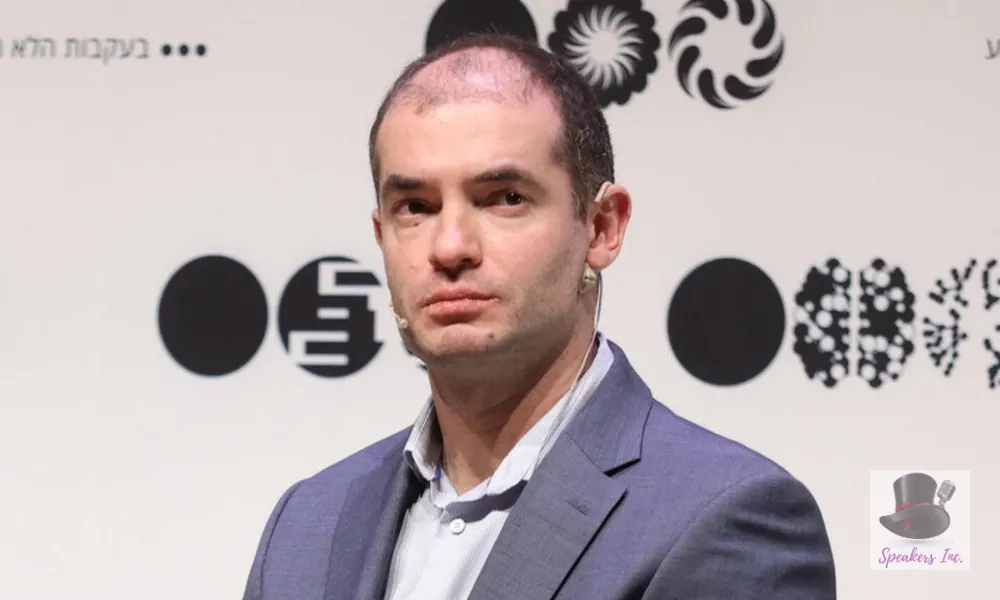
Quick Facts:
- Co-founder and Chief Scientist at OpenAI
- Pioneer of deep learning and sequence-to-sequence models
- Contributor to breakthroughs at Google Brain and DeepMind
- Co-creator of AlexNet with Geoffrey Hinton
Formats:
- AI research keynote speaker and deep learning thought leader
Audiences:
- Technology conferences, cybersecurity summits, AI researchers, enterprise innovation teams, government agencies, and leaders navigating the future of intelligent systems.
Outcomes:
- Understand the foundations and future trajectory of AI and AGI
- Explore real-world applications of deep learning technologies
- Gain insight into the societal impact of advanced AI systems
- Travels from: San Francisco, CA
- **US Fee range: On Request
Talent Services
Talent Short Bio
Ilya Sutskever is one of the most influential figures in artificial intelligence, celebrated for his foundational contributions to deep learning, computer vision, and natural language processing. As Co-founder and Chief Scientist at OpenAI, he has guided the creation of some of the world’s most impactful AI systems, including ChatGPT, GPT-4, and DALL·E 2. His leadership has helped establish OpenAI as a global force for advancing and safely deploying artificial general intelligence.
Before co-founding OpenAI, Ilya made defining contributions to the field through his work at Google Brain and DeepMind, where he co-invented technologies that changed the trajectory of AI, including sequence-to-sequence learning, key components behind modern machine translation, and the research foundations influencing AlphaGo. Earlier in his career, his work with Geoffrey Hinton produced AlexNet, the breakthrough neural network that transformed computer vision and ignited the deep learning revolution.
A Fellow of the Royal Society and a Time 100 Innovators honoree, Ilya is a sought-after keynote speaker whose insights illuminate the future of human-machine collaboration and the societal impact of advanced AI.
Talent Videos
The Exciting, Perilous Journey Toward AGI | Ilya Sutskever | TED
Just weeks before the management shakeup at OpenAI rocked Silicon Valley and made international news, the company's cofounder and chief scientist Ilya Sutskever explored the transformative potential of artificial general intelligence (AGI), highlighting how it could surpass human intelligence and profoundly transform every aspect of life. Hear his take on the promises and perils of AGI — and his optimistic case for how unprecedented collaboration will ensure its safe and beneficial development. (Recorded October 17, 2023)
Video Summary & Key Moments
You’ve all experienced the progress of artificial intelligence. Many of you may have spoken with a computer, and a computer understood you and spoke back to you. With the rate of progress being what it is, it’s not difficult to imagine that at some point in the future, our intelligent computers will become as smart or smarter than people. And it’s also not difficult to imagine that when that happens, the impact of such artificial intelligence is going to be truly, truly vast.
And you may wonder: Is it going to be OK when technology is so impactful?
And here my goal is to point out the existence of a force that many of you may have not noticed — a force that gives me hope that indeed, we will be happy with the result.
What is AI?
Artificial intelligence is nothing but digital brains inside large computers.
Every single interesting AI that you’ve seen is built on this idea.
Over decades, scientists and engineers have been figuring out how such digital brains should work and how to build and engineer them.
It is fitting that the seat of intelligence in humans is our biological brain, and the seat of intelligence in artificial intelligence is an artificial brain.
As AI advances, people — companies, governments, researchers — will increasingly:
Recognize the stakes
Collaborate to ensure safety
Act out of enlightened self-interest
Prioritize humanity’s future over competitive pressure
He believes this global shift in behavior will help us navigate AGI wisely.
Key Moments
Ilya Sutskever (OpenAI Chief Scientist) — Why next-token prediction could surpass human intelligence
In this 47 minute conversation, OpenAI Chief Scientist Ilya Sutskever explains why next-token prediction may exceed human intelligence, how AI progress unfolds, and what breakthroughs still matter.
Video Summary & Key Moments
In this wide-ranging interview on The Lunar Society, Ilya Sutskever reflects on the drivers of his research success, the dynamics of AI capabilities, and the path from today’s large language models to systems that surpass human performance. He attributes his scientific breakthroughs not to innate advantage but to giving his work everything he has, emphasizing perseverance and deep understanding over flashes of new ideas.
He discusses why illicit use of AI has not yet exploded, suggesting it may already be occurring quietly or that foreign actors have not fully operationalized current models. He notes that large-scale tracking of misuse is technically possible with specialized operations.
On AI’s economic window before AGI, he expects a multi-year period of rapidly increasing value, though hindsight may compress it into only a few standout years. When asked why AI adoption might disappoint, he identifies reliability as the sole plausible culprit; unreliable systems dampen real-world value regardless of capability.
Sutskever challenges the assumption that next-token prediction limits models to human-level performance. Accurate prediction requires understanding the underlying reality that produces text, and a sufficiently capable model can extrapolate beyond any individual person by inferring how a hypothetical, more advanced mind would behave.
On training, he explains that most reinforcement learning data already comes from models themselves, with humans training only the reward function. He expects human-AI collaboration, not full automation, to dominate future training improvements.
Key Moments
- 00:10:57 – Data, models, and research
- 00:15:27 – Alignment
- 00:20:53 – Post AGI Future
- 00:26:56 – New ideas are overrated
- 00:36:22 – Is progress inevitable?
Interest to Book? Send us your enquiry
No reviews available for this post.
Talent FAQ's
Do speakers charge a flat fee or by the hour?
Speaker fees can vary depending on factors such as expertise, demand, and event specifics. While some speakers may charge a flat fee for their services, others may have hourly rates. It’s best to discuss fee structures directly with the speaker or their representative to understand the pricing model.
What is the typical duration of a keynote speech and what is included?
Keynote speeches typically range from 30 to 90 minutes, with the duration determined by the speaker’s expertise, the event’s agenda, and audience preferences. Keynote speeches often include a combination of inspirational stories, practical insights, and actionable advice tailored to the event’s theme or objectives.
Does the scale of the event and audience size affect a speaker’s fee?
The scale of the event and audience size can indeed impact a speaker’s fee. Larger events with a broader reach or higher attendance may command higher fees due to increased exposure and demand. Conversely, smaller events or niche audiences may offer opportunities for more flexible pricing arrangements.
Travel expenses and other costs
Travel expenses such as transportation, accommodation, and meals are typically negotiated separately from the speaker’s fee. These costs vary depending on the speaker’s location, travel distance, and event duration. It’s important to clarify travel arrangements and expenses during the booking process to avoid misunderstandings.
Deposits and securing a booking
Many speakers require a deposit to secure a booking, with the remaining balance due closer to the event date. Deposits are often non-refundable and serve as a commitment from both parties. It’s advisable to discuss deposit requirements and payment terms with the speaker or their representative when finalizing the booking.
Additional tips and takeaways
- Virtual speaking appearances are a cost-effective alternative to high speaking fees, often 10-50% cheaper than in-person rates.
- There is typically no difference in fee for a 15-minute speech versus a 60-minute speech.
- Some motivational speakers are open to discounting their fee if hired for more than one event by the same organization.
- When browsing speakers, consider their location to keep travel costs down.
- Personal connections to your organization or event location can increase your chances of securing a renowned speaker.
- Be upfront about your needs and expectations to ensure a successful partnership.
- Speaker bureaus like Speakers Inc help guide you through the booking process to negotiate the best deal with favorable terms.
Ready to find the perfect speaker for your event? Use our advanced search feature or contact us to get started today!
Disclaimer
These remain the property of its owner and are not affiliated with or endorsed by Speakers Inc.
Fee Range Information
All talent fees exclude travel and accommodation where required.