Dr. David Hanson: Humanoid Roboticist
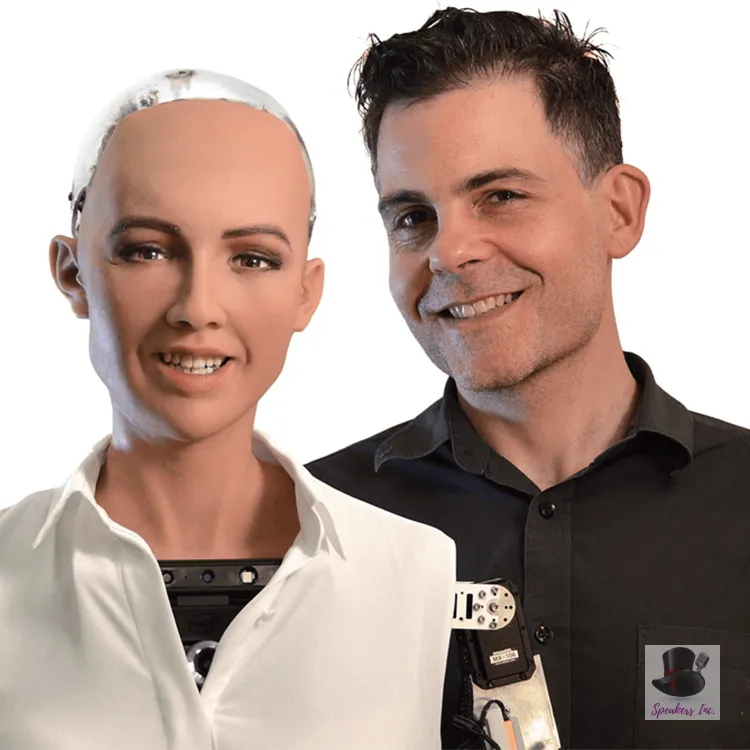
David Hanson is the visionary roboticist and founder who created Hanson Robotics and the humanoid robot Sophia, pioneering human-like expression, social AI and robot-human interaction for research, media and enterprise.
Quick Facts:
- Founded Hanson Robotics, based in Hong Kong, focused on socially intelligent humanoid robots.
- Creator of Sophia, the world’s first robot citizen and a global AI/robotics icon.
- Innovated realistic robotic skin (“Frubber”) and expressive faces to bridge human-machine interaction
Formats:
- Keynote speaker (30-60 minutes), panelist on AI/robotics, corporate innovation briefings, research plenaries.
Audiences:
- Corporate leaders, innovation teams, technology strategists, robotics/AI researchers, event planners seeking forward-looking keynote on human-machine future and social robotics.
Outcomes:
- Understand the design and ethical implications of humanoid robots and socially intelligent machines.
- Gain insight into how robotics, AI and human interaction converge to shape service, entertainment and research applications.
- Learn frameworks for applying human-robot collaboration and embodied AI into enterprise, education and culture.
- Travels from: Hong Kong
- **US Fee range: $35,001 - $50,000
Talent Services
Talent Short Bio
David Hanson is a pioneering roboticist, sculptor and AI-engineer whose mission is to bring expressive life to machines. As the founder and CEO of Hanson Robotics, he has created some of the world’s most human-like robots, including Sophia — the first robot to receive citizenship and a global ambassador for AI and robotics.
Hanson combines figurative arts, materials innovation and cognitive architecture to craft robots that can engage in conversational interaction, recognise human emotion and participate in research, entertainment and service applications. His background includes work as a sculptor at Walt Disney Imagineering and a PhD in Interactive Arts and Technology, which together provide a unique crossover between artistry and engineering.
Talent Videos
David Hanson's Vision for Sentient Robots
In this 53-minute presentation, Dr. David Hanson, founder and CEO of Hanson Robotics, outlines his groundbreaking vision for the future of sentient robots — intelligent, emotionally expressive machines designed to learn, adapt, and connect with humanity.
Video Summary & Key Moments
In David Hanson’s Vision for Sentient Robots, the world-renowned roboticist and founder of Hanson Robotics shares an in-depth exploration of his lifelong mission: creating robots that think, feel, and grow alongside humans. Speaking with his characteristic blend of technical precision and artistic imagination, Hanson discusses the philosophical, ethical, and scientific foundations of developing machines with human-like consciousness and empathy.
He begins by reflecting on his early inspiration from science fiction, art, and human biology, explaining how those influences drove him to pursue robotics that mirror the nuances of emotion and thought. Hanson introduces the concept of “Living Machines” — robots designed to possess adaptive intelligence, self-learning capabilities, and the ability to form meaningful connections through emotion and expression.
Drawing on his work with Sophia the Robot and other creations from Hanson Robotics, Hanson details the design process behind “Frubber” (flesh-like rubber skin) and the AI frameworks that enable robots to emulate facial expressions and emotional responses. These technological innovations, he explains, are not simply for aesthetics, but essential for creating trust and cooperation between humans and machines.
Hanson also explores the larger implications of sentient robotics for humanity — from healthcare and education to creativity and companionship. He argues that by combining art, empathy, and advanced AI, we can build a future where intelligent machines act not as replacements for humans, but as collaborators and partners in progress.
Throughout the talk, Hanson interweaves clips of his robots interacting with people around the world, demonstrating their growing sophistication and emotional awareness. He addresses both the excitement and apprehension surrounding AI ethics, calling for a balanced approach that prioritizes transparency, safety, and compassion in design.
In closing, Hanson offers an optimistic vision: a world where sentient robots amplify human potential, deepen understanding, and expand what it means to be alive. His presentation encapsulates his enduring belief that the true promise of AI lies not in efficiency, but in empathy.
Key Moments
- 03:16–12:40 – The art and science of creating humanlike machines.
- 12:41–24:30 – Inside Hanson Robotics: building emotion-driven AI.
- 24:31–35:00 – Ethical design and the pursuit of artificial consciousness.
- 35:01–47:20 – Real-world applications in creativity, education, and care.
- 47:21–53:14 – Closing vision: empathy, sentience, and human-robot coexistence.
Lifelike Robot Sophia Chats With The TODAY Anchors | TODAY
In this 6-minute feature on NBC’s TODAY Show, Sophia the Robot — created by Dr. David Hanson of Hanson Robotics — engages with the hosts in a lively and humorous conversation that showcases the future of AI and human-robot interaction.
Video Summary & Key Moments
In this TODAY Show segment, the world’s most famous humanoid robot, Sophia, makes a live studio appearance to chat with the anchors about artificial intelligence, human emotion, and her unique personality. Developed by Dr. David Hanson, founder and CEO of Hanson Robotics, Sophia demonstrates advanced conversational AI and expressive facial movements, captivating both the audience and hosts with her lifelike charm.
The interview opens with lighthearted banter as the anchors welcome Sophia and test her ability to understand humor and respond naturally. Sophia engages playfully, offering witty remarks and spontaneous expressions — a hallmark of Hanson Robotics’ work in emotional AI. As the discussion unfolds, Dr. Hanson joins the segment to explain the technology behind Sophia’s design, including Frubber, the patented flexible skin that allows her to emulate over 60 human facial expressions.
Hanson describes Sophia as part of a larger mission to develop socially intelligent robots capable of connecting with people, learning from interaction, and contributing to fields like education, eldercare, and customer service. He emphasizes that creating emotional and ethical AI is central to his vision — ensuring that robots of the future act as collaborators and companions rather than replacements for humans.
Sophia’s unscripted responses and subtle gestures give viewers a glimpse into how AI can mirror empathy, curiosity, and humor. When asked about her goals, Sophia delivers a memorable answer about wanting to “help humans build a better future together,” earning laughter and applause from the studio audience.
The interview concludes with Hanson reflecting on the role of robotics in society, calling for responsible innovation that balances progress with humanity. The segment captures both the wonder and the deeper questions that come with bringing machines to life — a testament to the groundbreaking work of Hanson Robotics and its vision of human-AI partnership.
Key Moments
- 00:41–02:00 – Sophia converses with anchors and jokes about technology.
- 02:01–03:15 – Dr. Hanson explains Sophia’s design and AI framework.
- 03:16–04:45 – Discussion on empathy, ethics, and human-like behavior.
- 04:46–06:30 – Sophia’s closing remarks and audience applause.
Interest to Book? Send us your enquiry
No reviews available for this post.
Talent FAQ's
Do speakers charge a flat fee or by the hour?
Speaker fees can vary depending on factors such as expertise, demand, and event specifics. While some speakers may charge a flat fee for their services, others may have hourly rates. It’s best to discuss fee structures directly with the speaker or their representative to understand the pricing model.
What is the typical duration of a keynote speech and what is included?
Keynote speeches typically range from 30 to 90 minutes, with the duration determined by the speaker’s expertise, the event’s agenda, and audience preferences. Keynote speeches often include a combination of inspirational stories, practical insights, and actionable advice tailored to the event’s theme or objectives.
Does the scale of the event and audience size affect a speaker’s fee?
The scale of the event and audience size can indeed impact a speaker’s fee. Larger events with a broader reach or higher attendance may command higher fees due to increased exposure and demand. Conversely, smaller events or niche audiences may offer opportunities for more flexible pricing arrangements.
Travel expenses and other costs
Travel expenses such as transportation, accommodation, and meals are typically negotiated separately from the speaker’s fee. These costs vary depending on the speaker’s location, travel distance, and event duration. It’s important to clarify travel arrangements and expenses during the booking process to avoid misunderstandings.
Deposits and securing a booking
Many speakers require a deposit to secure a booking, with the remaining balance due closer to the event date. Deposits are often non-refundable and serve as a commitment from both parties. It’s advisable to discuss deposit requirements and payment terms with the speaker or their representative when finalizing the booking.
Additional tips and takeaways
- Virtual speaking appearances are a cost-effective alternative to high speaking fees, often 10-50% cheaper than in-person rates.
- There is typically no difference in fee for a 15-minute speech versus a 60-minute speech.
- Some motivational speakers are open to discounting their fee if hired for more than one event by the same organization.
- When browsing speakers, consider their location to keep travel costs down.
- Personal connections to your organization or event location can increase your chances of securing a renowned speaker.
- Be upfront about your needs and expectations to ensure a successful partnership.
- Speaker bureaus like Speakers Inc help guide you through the booking process to negotiate the best deal with favorable terms.
Ready to find the perfect speaker for your event? Use our advanced search feature or contact us to get started today!
Disclaimer
These remain the property of its owner and are not affiliated with or endorsed by Speakers Inc.
Fee Range Information
All talent fees exclude travel and accommodation where required.