
DIVERSITY AND INCLUSION IS GOOD FOR BUSINESS
- Author: Kgadi Mmanakana
Read the news article
When it comes to diversity and inclusion as a leader you need to understand one thing, you need to understand that;
It is more than just activism, minorities vs the privileged, and correcting the injustices
I’ve observed the efforts of many organizations and leaders when it comes to diversity, equity, and inclusion, to be more civil society driven than business driven.
Their efforts are more about absolving their own guilts and trying to look relevant because they are afraid of being cancelled. And it is that kind of approach that ends up throwing them on the “black twitter” radar, and on the tabloids front pages, because their strategies when it comes to diversity and inclusion, are misguided thus unsustainable and inauthentic.
To get DEI strategy right, it has to be make socioeconomic sense – it has to work for both the society and business. And this starts with making it make business sense. In understanding, why you should have a diverse team and be inclusive in the first place.
DIVERSITY AND INCLUSION IS GOOD FOR BUSINESS
Today’s leading organizations and forward-thinking leaders understand that Diversity & Inclusion is much more than a buzzword, they realize it can be, that IT IS, a business strategy that is capable of driving company performance, enhancing innovation and employee engagement.
They are not employing diverse people because they are afraid of being cancelled, they do so because it makes business sense. It makes business sense for them to not have people of the same background and that look the same because that will perpetuate herd thinking and trump innovation, and creativity.
They employ diverse people because they understand the power of difference – different world view and experiences means a unique thought process, mindsets, and work ethic. They employ diverse people because that’s a competitive advantage on its own – no other organization can have a team composition that they have, they can never be copied.
Branding, and strategy frameworks can be imitated, but mindsets cannot be. They understand that to have a truly competitive team, they need to have someone from Yale, Wits, UJ, Turf, VUT, and a bootstrapper.
They understand that white and black people have had different experiences in life by virtue of their skin colour, and as such they have different worldviews.
They understand that cis gender, heterosexual and the LGBTI people have had different experiences in life, so are people from different religions and cultural heritage, age groups etc. and as such, they have different worldviews. Different backgrounds also means different work ethics.
Diversity and Inclusion strategy is about the power of difference. What people from different walks of life who come together can do. What their unique paradigms, work ethic and access can do for the business.
It is only when leaders and organizations understand the power of difference that they can start implementing effective, profitable, and human friendly diversity and inclusion strategies.
Why we should all come out of the closets
Diversity is about every single person, including yourself. Everyone is unique and their perspectives are different based on lots of influences such as their own life experiences, culture, working & learning styles, personality type, education etc.
Often times when the subject of diversity and inclusion is brought up, many people think of race (blacks), gender (women), and sexual orientation (LGBTI).
Historically those are the communities and categories that have been on the forefront, primarily because of the political injustices. However, there is more to diversity and inclusion. I actually think we are all to a certain extent minorities. The human race’s diversity is complex and pronounced. We are all on the spectrum.
Neuro, developmental and personality disorders, sensitivity, introversion, and spirituality, just to name a few. And the degree to which a person is on each spectrum, affects how they show up in the organization, and may actually be as acute as the sexuality and race issues, in terms of experience.
The experience of feeling alienated, discriminated against and of not belonging. There is possibly empaths and spiritual healers, people with bipolar or autism etc. within your organization that you may or may not know of, that feel the same as the closeted gay or lesbian executive in your organization – always compensating and being afraid of being “seen” because they afraid they may lose their jobs.
In order to promote diversity and inclusion and reap the dividends that come with the power of difference, every team member in your organization (including yourself) must feel that they belong in the room and that their presence is desired. When employees bring the true version of themselves to work, knowing their opinions matter and their voices are heard, employee engagement and performance will improve.
Coming out policies should go beyond “do you have a disability”, “gender” on a personnel file. You need to start extending a little bit further, either with “personality traits”, “mental health support for”, “sexual orientation”, “other parts that make you, you that we should know about”, or with courageous conversation team build building sessions to have your team walk the line and hear about their experiences at work.
And none of these should be introduced as “issues” or be introduced with a “prefer not to say” option, because no employee will disclose their mental health “issues” if that issue could cost them their job. Not coming out ends up depleting employee’s energy because instead of channeling that energy towards work, they invest it in their silence battle with anxiety, hiding their sexuality, enduring work dynamics that work against their level of sensitivity, and generally hiding who they truly are.
As a leader, you should also come out to your team, so that everyone know that “it’s not a big deal.”
The cost of non-inclusivity
Employee disengagement
Low employee morale
Poor customer service and experience
High staff turnover
Prone to disruption
Herd thinking
Missing the opportunity of local market understanding by diverse workforce
How Diversity and Inclusion is good for your business
Engaged and high-performance team
Fosters Innovation – from the power of difference
Market intelligence – locally sourced market understanding
Employer of choice – Attract top talent
Brand relevance – adapting to shifting society behaviour
As a leader, to draw value from your employees or team members, and reap all the benefits you will need to create a psychologically and emotionally safe environment for all. That’s where you start.
Article written by: Kgadi Mmanakana and originally posted on LinkedIn
Driven by the power of brave leadership and Courageous culture, as a Keynote and Motivational Speaker, Kgadi merges that power with her market intelligence (from over 6 years in strategy consulting and entrepreneurship development), systems thinking and pure passion to want to see people thriving and businesses staying in business.
To provide business leaders, divisional directors and managers with new age leadership and culture practices that unlock Employee Engagement, and empower staff and sales teams with strategic insights, paradigm shift principles to use to advance themselves, and empower them into an inspired, innovative and thriving workforce.
Kgadi Mmanakana
Looking to book this speaker for your next event?
At Speakers Inc., we connect you with the perfect speaker for your audience.
👉 Contact our team to check availability and secure your speaker
https://speakersinc.com/contact-us/speakers-inc/
👉 Watch more speaker videos on YouTube
https://www.youtube.com/@speakersincUSA/
Further articles you may enjoy:
- (18)
How to Find a Motivational Speaker for Your Employee Engagement Event Employee disengagement is not a morale problem. It is a revenue problem. Gallup’s 2025 State of the Global Workplace report found that only 21% of employees worldwide are engaged at work, a drop from 23% the previous year. In the United States alone, that […]
- September 3, 2026
- (28)
The Most In-Demand Keynote Speaker Topics for 2026 (And What They Mean for Your Event) Corporate event planners are facing a different booking landscape in 2026. Audiences are sharper, more skeptical, and less patient with speakers who deliver polished performances without real substance. Boards want keynotes that move strategy. Attendees want talks that help them […]
- September 2, 2026

- (25)
Best Motivational Speakers for a Nonprofit Annual Gala (and How to Choose the Right One) The keynote speaker at a nonprofit gala is not just a line item on the run-of-show. They are the emotional turning point of the evening. Get it right, and your guests leave inspired, connected to your mission, and ready to […]
- August 28, 2026

- (58)
Best Keynote Speakers for Tech Conferences in 2026 Introduction The best keynote speakers for tech conferences in 2026 bring more than a polished stage presence. They bring clear point of view, real-world credibility, and a talk that maps to the audience’s priorities, whether that means AI adoption, innovation strategy, digital transformation, cybersecurity, or leadership through […]
- August 18, 2026
- (21)
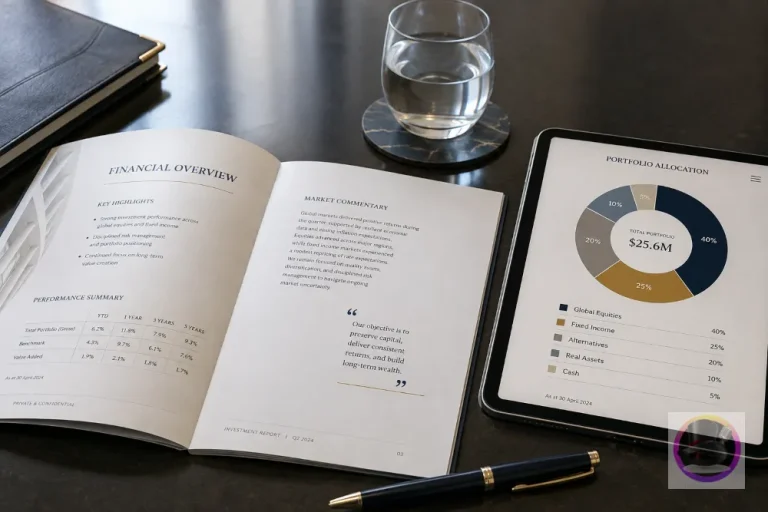
Top Finance Speakers for Financial Planning and Wealth Management Conferences Financial audiences are unforgiving. Advisors and wealth managers spend their days interpreting markets, navigating client psychology, and justifying every recommendation with data. When they sit down for a conference keynote, they expect the same rigor from the stage. A speaker who delivers generic inspiration or […]
- August 13, 2026

- (36)
Best Digital Transformation Speakers for Events: A Speakers Inc Shortlist for 2026 Most digital transformation events get the speaker brief wrong. The instinct is to book the most impressive futurist on the circuit, someone with a big TED Talk, a polished deck full of exponential curves, and a talent for making the future sound both […]
- August 10, 2026

- (26)
Best Futurist Speakers for Digital Transformation Events Digital transformation events carry a heavy burden. Attendees arrive skeptical, overwhelmed by buzzwords, and quietly wondering whether their organization is already behind. The keynote speaker you choose sets the entire tone. Either the audience leaves energized with a clear picture of what comes next, or they leave with […]
- August 4, 2026
- (43)
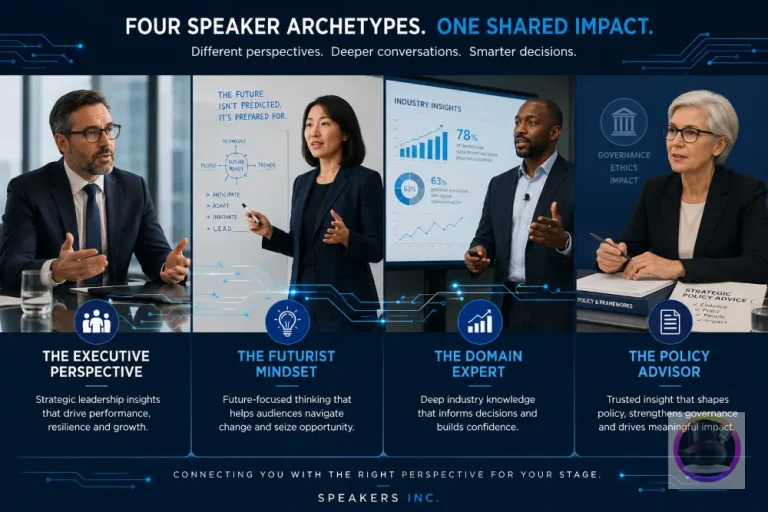
How to Evaluate an AI Keynote Speaker for Your Industry What Makes an AI Keynote Speaker Right for Your Industry? The AI speaker market has exploded. There are now hundreds of people positioning themselves as AI keynote speakers, and most of them will tell you they can speak to any audience. The reality is more […]
- July 30, 2026
No results available