

Dr Jordan Nguyen: Human Futurist
Dr Jordan Nguyen is a human futurist, biomedical engineer, and founder of Psykinetic who designs inclusive technologies and keynotes on AI, robotics, and ethical innovation.
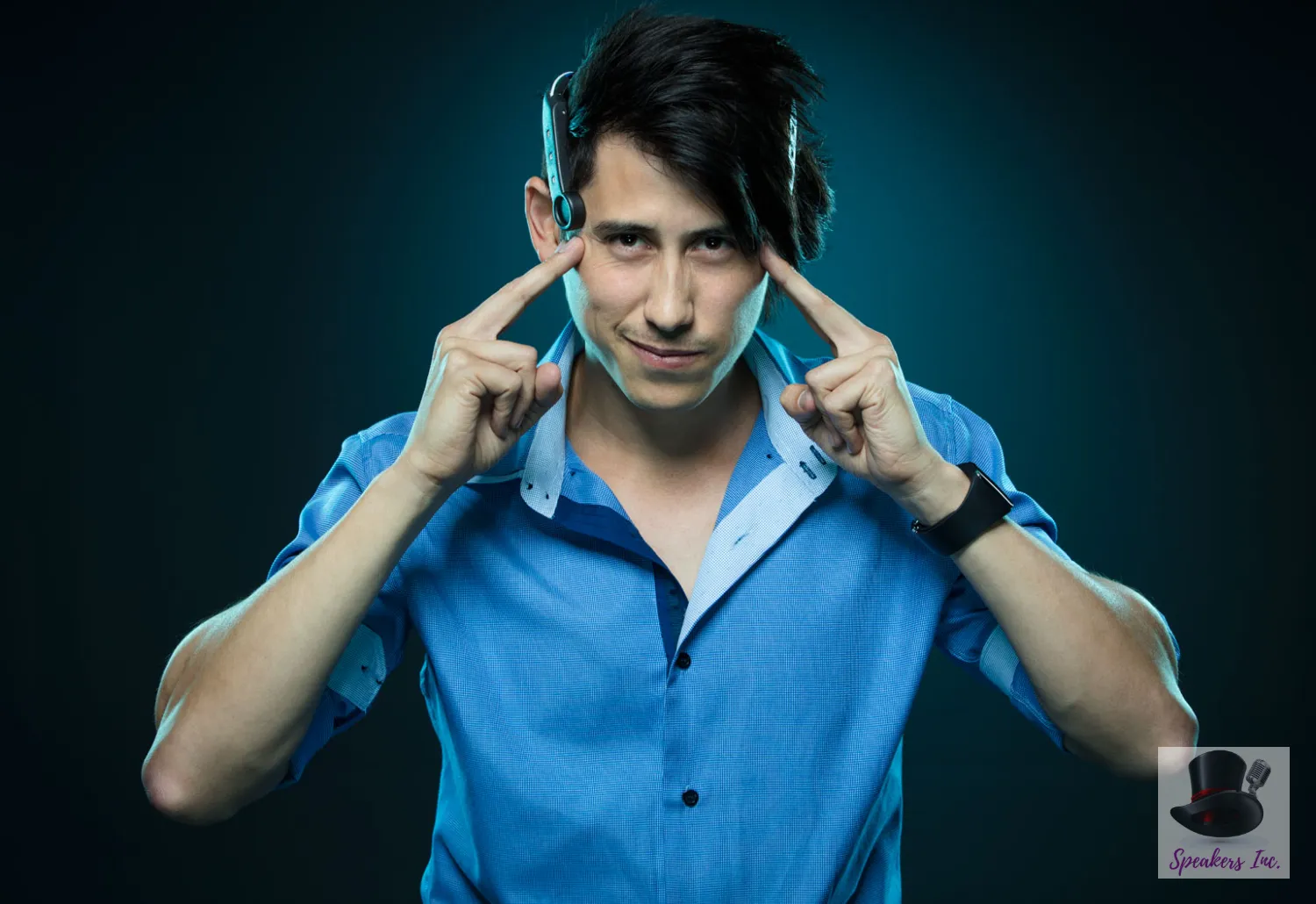
Quick Facts:
- Founder and CEO of Psykinetic, building inclusive assistive technologies and apps.
- Developed a mind-controlled wheelchair during PhD research at UTS.
- Presenter of ABC Catalyst’s two-part documentary “Becoming Superhuman.”
- Author of “A Human’s Guide to the Future” on thriving with fast-evolving tech.
- Recognized as a New South Wales Australian of the Year finalist.
Formats:
- Innovation keynotes, futurist presentations, technology and leadership conference presentations
Audiences:
- Enterprise leaders, innovation teams, healthcare and med-tech, financial services, government, education, disability and inclusion advocates.
Outcomes:
- A pragmatic lens on AI and automation opportunities grounded in ethics and inclusion.
- Case-based frameworks for human-centered innovation and assistive tech design.
- Action steps to future-proof teams and services with accessible, scalable technology.
- Travels from: Los Angeles, CA
- **US Fee range: $35,001 - $50,000
Talent Services
Keynote Topics:
BEYOND SUPERHUMAN – TECHNOLOGY FOR HUMANITY
With today’s staggering advances in technology, many new possibilities are emerging which almost seem to have come straight out of the realms of sci-fi fantasy. When we connect some of the dots between various cutting-edge fields, the innovations become even more intriguing.
In this presentation, Biomedical engineer Dr Jordan Nguyen will raise an incredibly interesting and perhaps confronting conversation around links drawn between the fields of artificial intelligence, virtual reality, new techniques in 3D human scanning, neuroscience, and the ideas of human consciousness.
This topic raises a number of questions about what it is to be human and what is a moral approach to the incredible things we can achieve today with the latest advancements in technology – advancements that are increasingly blurring the lines between the virtual world and the real world.
AI, EVOLVING TECHNOLOGY & HUMAN EXPERIENCE
Automation and Artificial Intelligence has been around for many years, but more recently the large leaps and bounds of the technology mean they are drastically affecting our businesses and digital lives.
We’re finding we need to transform in response to these evolving technologies.
Everyone has heard about the oncoming threat of AI, but what about the opportunities? What does it allow us to gain?
Talent Short Bio
Dr Jordan Nguyen is an Australian biomedical and AI engineer whose work focuses on technology for humanity. He founded Psykinetic, a social enterprise creating accessible, empowering tech for people with disabilities, and is widely known for innovations like a mind-controlled smart wheelchair first developed during his PhD at the University of Technology Sydney.
Jordan presents internationally on AI, robotics, extended reality, and human-centered design, weaving rigorous engineering with uplifting stories from real collaborations. His ABC Catalyst documentary “Becoming Superhuman” and his book “A Human’s Guide to the Future” explore how emerging tech can expand human capability when guided by ethics and inclusion.
Event planners book Jordan for clear, practical frameworks that help leaders navigate disruption while staying people-first.
Talent Videos
Dr Jordan Nguyen - The Project TV
A concise media feature highlighting mind-controlled mobility, eye-tracking, VR and mixed reality, and the people-first mission behind Psykinetic.
Video Summary & Key Moments
This short segment introduces Dr Jordan Nguyen’s mission to build inclusive, human-centered technology. It opens with quick context on rapid technological change, then moves through examples from his work: a mind-controlled wheelchair using trained EEG patterns with safety-first navigation, eye-tracking interfaces that enable communication and control, and immersive VR or mixed-reality experiences that expand access to learning and creativity.
The piece underscores collaboration with artists, clinicians, and families, showing how design choices translate to real independence for people with disability. It closes with a call to action for leaders and teams to combine inspiration with practical engineering to solve meaningful problems.
Key Moments
00:00 Cold open and presenter intro; Jordan’s mission in one line
00:20 Mind-controlled wheelchair concept and safety overview
01:10 Eye-tracking and alternative interfaces for access and communication
02:00 VR and mixed-reality demos that enable exploration and learning
03:05 Human stories and collaboration across disciplines
04:10 Takeaways for inclusive, ethical innovation
04:45 Closing message and next steps
Videos
Dr Jordan Nguyen - The Project TV
A concise media feature highlighting mind-controlled mobility, eye-tracking, VR and mixed reality, and the people-first mission behind Psykinetic.
Transcript
This short segment introduces Dr Jordan Nguyen’s mission to build inclusive, human-centered technology. It opens with quick context on rapid technological change, then moves through examples from his work: a mind-controlled wheelchair using trained EEG patterns with safety-first navigation, eye-tracking interfaces that enable communication and control, and immersive VR or mixed-reality experiences that expand access to learning and creativity.
The piece underscores collaboration with artists, clinicians, and families, showing how design choices translate to real independence for people with disability. It closes with a call to action for leaders and teams to combine inspiration with practical engineering to solve meaningful problems.
Key Moments
00:00 Cold open and presenter intro; Jordan’s mission in one line
00:20 Mind-controlled wheelchair concept and safety overview
01:10 Eye-tracking and alternative interfaces for access and communication
02:00 VR and mixed-reality demos that enable exploration and learning
03:05 Human stories and collaboration across disciplines
04:10 Takeaways for inclusive, ethical innovation
04:45 Closing message and next steps
Interest to Book? Send us your enquiry
Overview of Dr. Jordan Nguyen's Keynote Presentation
Dr. Jordan Nguyen's keynote presentation received high praise from attendees at various events, highlighting his ability to inspire and engage diverse audiences. Reviewers emphasized his unique blend of cutting-edge technology and relatable human stories, which left audiences feeling motivated and ready to innovate.
Strengths:
- Transformative and inspiring keynote that resonated with attendees.
- Exceptional ability to connect with a diverse audience.
- Seamless booking and professional management by Speakers Inc.
Weaknesses:
- No significant weaknesses were mentioned in the reviews.
Overall, Dr. Nguyen is highly recommended for events seeking an impactful speaker who can drive motivation and innovation.
Talent FAQ's
Do speakers charge a flat fee or by the hour?
Speaker fees can vary depending on factors such as expertise, demand, and event specifics. While some speakers may charge a flat fee for their services, others may have hourly rates. It’s best to discuss fee structures directly with the speaker or their representative to understand the pricing model.
What is the typical duration of a keynote speech and what is included?
Keynote speeches typically range from 30 to 90 minutes, with the duration determined by the speaker’s expertise, the event’s agenda, and audience preferences. Keynote speeches often include a combination of inspirational stories, practical insights, and actionable advice tailored to the event’s theme or objectives.
Does the scale of the event and audience size affect a speaker’s fee?
The scale of the event and audience size can indeed impact a speaker’s fee. Larger events with a broader reach or higher attendance may command higher fees due to increased exposure and demand. Conversely, smaller events or niche audiences may offer opportunities for more flexible pricing arrangements.
Travel expenses and other costs
Travel expenses such as transportation, accommodation, and meals are typically negotiated separately from the speaker’s fee. These costs vary depending on the speaker’s location, travel distance, and event duration. It’s important to clarify travel arrangements and expenses during the booking process to avoid misunderstandings.
Deposits and securing a booking
Many speakers require a deposit to secure a booking, with the remaining balance due closer to the event date. Deposits are often non-refundable and serve as a commitment from both parties. It’s advisable to discuss deposit requirements and payment terms with the speaker or their representative when finalizing the booking.
Additional tips and takeaways
- Virtual speaking appearances are a cost-effective alternative to high speaking fees, often 10-50% cheaper than in-person rates.
- There is typically no difference in fee for a 15-minute speech versus a 60-minute speech.
- Some motivational speakers are open to discounting their fee if hired for more than one event by the same organization.
- When browsing speakers, consider their location to keep travel costs down.
- Personal connections to your organization or event location can increase your chances of securing a renowned speaker.
- Be upfront about your needs and expectations to ensure a successful partnership.
- Speaker bureaus like Speakers Inc help guide you through the booking process to negotiate the best deal with favorable terms.
Ready to find the perfect speaker for your event? Use our advanced search feature or contact us to get started today!
Disclaimer
These remain the property of its owner and are not affiliated with or endorsed by Speakers Inc.
Fee Range Information
All talent fees exclude travel and accommodation where required.