
Photo credit: Photo by AbsolutVision on Unsplash
Best Innovation Speakers for Startup Conferences
- Author: Speakers Inc
Read the news article
The Best Innovation Speakers and Entrepreneurs for Your Startup Conference
Booking a keynote speaker for a startup conference is one of the highest-stakes decisions an event planner makes. The right speaker can crystallize a theme, energize a room of founders, and send attendees home with frameworks they actually use. The wrong one leaves a crowd of entrepreneurs checking their phones.
The problem is that “innovation speaker” has become a catch-all term. It covers everyone from former Fortune 500 executives offering corporate platitudes to genuine founders who built billion-dollar companies from scratch. For a startup audience, the difference is immediately obvious from the stage.
What startup audiences demand: Real founder experience, honest failure stories, and tactical frameworks, not polished presentations about “disruption” in the abstract.
This guide cuts through the noise. Below are the most in-demand innovation and entrepreneurship speakers organized by the specific focus area they serve best, so you can match the right voice to your conference’s core theme.
How to Use This Guide
Before browsing names, define your conference’s primary goal:
- Scaling and hypergrowth — your audience has traction and needs to learn how to build
- Product-market fit — your audience is early-stage, searching for the right problem to solve
- Applied AI and deep tech — your audience wants to understand and build with emerging technology
- Corporate innovation and culture — your audience is building innovation inside larger organizations
The speakers below are grouped by these four categories. Most can speak across multiple themes, but each has a signature topic where they are genuinely unmatched.
Scaling and Building Empires: Speakers for Growth-Stage Conferences
Growth-stage startup conferences attract founders who have already validated their idea and are now wrestling with the harder problem: how to build a company that scales without falling apart. The speakers who resonate most with this audience are those who have personally navigated the chaos of hypergrowth, not those who have studied it from the outside.
Marc Randolph, Co-Founder and First CEO of Netflix
Marc Randolph co-founded Netflix in 1997 and served as its first CEO, guiding the company through its earliest and most uncertain years before it became the streaming giant that redefined entertainment globally. His keynote is built around a deceptively simple idea: there is no such thing as a perfect idea, only a system for testing bad ones quickly.
Randolph’s talk draws directly from his book That Will Never Work, which traces the founding of Netflix through dozens of rejected concepts before the team landed on the model that worked. For a startup audience, the message is both practical and liberating.
Signature keynote themes:
- The founder’s mindset: why tolerance for risk is the core entrepreneurial skill
- Testing ideas fast: how Netflix built a culture of experimentation at scale
- Innovation and disruption: the two ingredients that actually matter
- Building corporate culture as a competitive advantage
What makes Randolph particularly effective on a startup conference stage is his willingness to share the failures alongside the wins. He has mentored startup founders for years since leaving Netflix and brings that coaching instinct to the keynote format.
“There are really only two important ingredients to disruption and innovation. First, you need a tolerance for risk. And second, you need ideas, you need to train yourself to see the world as an imperfect place.” — Marc Randolph
Chris Barton, Founder of Shazam
Chris Barton founded Shazam in 2000, more than a decade before music recognition technology was a mainstream concept. He built the company through the pre-smartphone era, pivoting and scaling until Shazam reached over one billion downloads. Apple acquired the company in 2018 for a reported $400 million.
Barton’s keynote is especially relevant for conferences focused on consumer AI applications and mass-market product growth. He speaks from direct experience about what it takes to build a product that billions of people use, how to survive the long years before a market is ready for your idea, and how to engineer viral growth through a product that genuinely solves a problem.
Why he works for scaling-focused conferences:
- Lived experience building a consumer AI product before the category existed
- Practical frameworks for achieving hyper-growth in competitive markets
- Honest account of navigating acquisition and the decisions that led to it
For event planners programming a track around AI-driven product development or consumer tech, Barton brings a rare combination of technical credibility and commercial scale.
Finding Product-Market Fit: The Speaker Every Early-Stage Conference Needs
No challenge kills more startups than the failure to find product-market fit. It is the most critical milestone in a company’s early life, and it is also the most misunderstood. Most early-stage founders focus obsessively on their solution when the real work is understanding the problem deeply enough that the solution becomes obvious.
There is one speaker who has turned this insight into a career-defining framework.
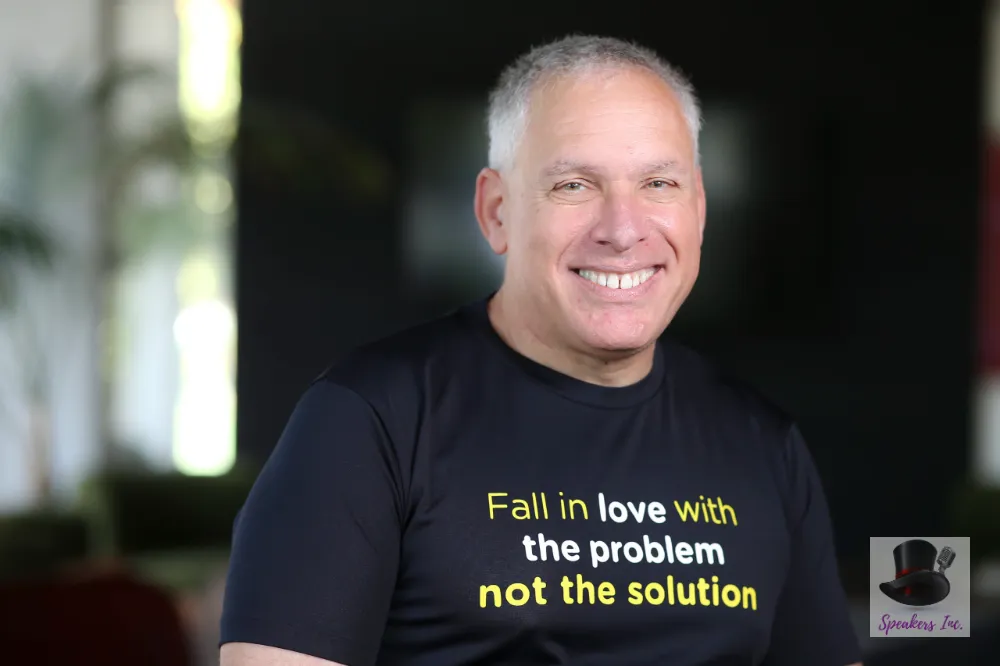
Uri Levine, Co-Founder of Waze and Moovit
Uri Levine is a two-time unicorn builder, which puts him in a very small category of entrepreneurs. He co-founded Waze, the community-based navigation app that Google acquired for $1.1 billion in 2013. He then went on to build Moovit, a public transit platform that Intel acquired for $1 billion in 2020. More than 2 billion people have used products he created.
His keynote is anchored in a single, powerful principle: fall in love with the problem, not the solution. It is also the title of his book, which has become a widely read guide for startup founders navigating the early stages of company building.
What attendees take away from a Uri Levine keynote:
| Topic | Core Insight |
|---|---|
| Product-market fit | “If you do not figure out product-market fit, you will die” |
| User obsession | Understand your users before you build for them |
| Go-to-market strategy | How to get to a billion users |
| Business model design | How to make money once you have the users |
| Team decisions | The hard CEO choices around hiring and firing |
Levine is particularly effective for conferences where the audience includes early-stage founders, accelerator cohorts, or investors evaluating pre-seed and seed companies. His credibility is not theoretical: he has navigated the product-market fit journey twice, in different markets, with different technologies, and won both times.
Best fit for: Pre-seed to Series A conferences, accelerator demo days, startup ecosystem events, and any program focused on early-stage company building.
For event planners looking to build a program around entrepreneurship and startup growth, Levine’s session typically anchors the agenda because the framework he teaches applies regardless of industry or technology vertical.
Applied AI and Deep Tech: Speakers Who Have Actually Built It
AI and deep tech have become the dominant themes at startup conferences, but the speaker market has not kept pace with the demand for genuine expertise. Most “AI speakers” are commentators. The two speakers below are builders: founders who created the technologies that defined entire categories.
Adam Cheyer, Co-Creator of Siri
Adam Cheyer is one of the most significant figures in the history of applied AI. He co-created Siri, the voice assistant that Apple acquired in 2010 and which became the template for every AI assistant that followed. But Siri is only part of the story. Cheyer has founded or co-founded five companies, demonstrating a consistent ability to identify deep-tech opportunities and build them into viable businesses.
His keynote is not a history lesson about Siri. It is a practical guide to launching disruptive deep-tech startups, from identifying the right problem to assembling the right team to navigating the commercialization challenges that kill most deep-tech ventures before they reach scale.
What makes Cheyer different from other AI speakers:
- Five-time founder with direct experience across multiple AI ventures
- Speaks to the engineering and business challenges simultaneously
- Offers a framework for evaluating which AI applications will actually achieve product-market fit
- Addresses the specific challenges of building ventures where the technology itself is the product
For conferences with a technical founder audience or an AI-first investment thesis, Cheyer’s session delivers depth that most AI speakers simply cannot match.
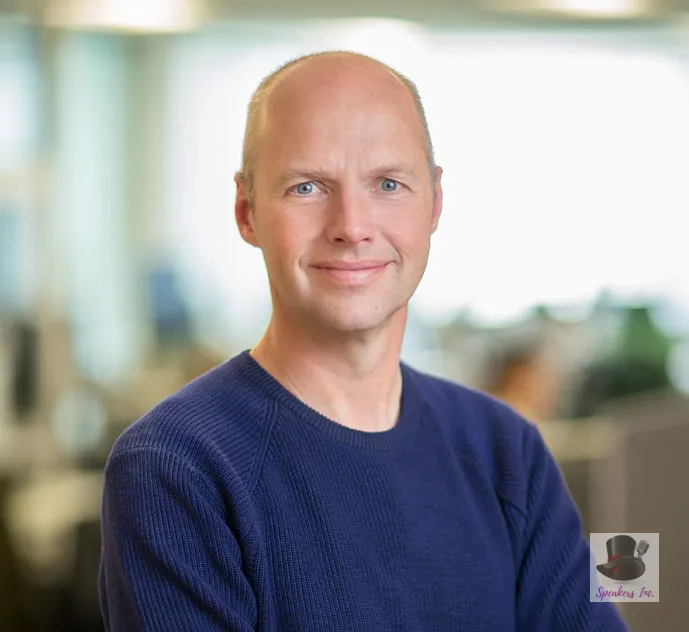
Sebastian Thrun, Founder of Google X and Waymo
Sebastian Thrun is one of the most decorated figures in the history of robotics and autonomous systems. He founded Google X, the moonshot lab that has produced some of the most ambitious technology projects of the past two decades. He also founded Waymo, the autonomous vehicle company that has become the global benchmark for self-driving technology.
Beyond his founding work, Thrun co-founded Udacity, the online learning platform that has trained hundreds of thousands of engineers in AI, machine learning, and autonomous systems, demonstrating his commitment to democratizing access to deep-tech education.
Ideal conference contexts for Sebastian Thrun:
- Robotics, autonomous systems, and hardware startup conferences
- Deep-tech and frontier technology investor summits
- AI strategy conferences for enterprise and government audiences
- Programs focused on the intersection of technology and transportation, healthcare, or manufacturing
Best fit for: Series B and beyond conferences, corporate innovation summits with a technology focus, and events where the audience is evaluating where to place their next major technology bet.
Key insight: The distinction between Cheyer and Thrun matters for programming. Cheyer speaks to the startup journey of building AI ventures. Thrun speaks to the frontier of where AI and robotics are going. Both are essential depending on whether your audience is building now or planning what to build next.
For event planners programming a dedicated innovation and technology track, pairing these two speakers across a single day creates a powerful arc: where we are today and where the technology is heading.
Corporate Innovation and Culture: Speakers Who Make Organizations Move
Not every startup conference is attended exclusively by independent founders. Many draw audiences from inside large organizations: innovation leads, intrapreneurs, R&D executives, and corporate venture teams who are trying to build startup-like speed and creativity within established structures. This audience has specific needs that most founder-speakers do not address.
The two speakers below specialize in exactly this challenge.
Lisa Bodell, Founder of FutureThink
Lisa Bodell founded FutureThink, a global innovation research and training company, and has spent two decades helping organizations remove the complexity that strangles innovation before it starts. She is the author of Kill the Company and Why Simple Wins, both of which have become standard references for corporate innovation leaders.
Her central argument is counterintuitive: the biggest obstacle to innovation inside organizations is not a lack of ideas. It is an excess of processes, rules, and meetings that consume the time and energy that creative work requires. Her keynote gives leaders specific, actionable methods to simplify their organizations and create the conditions where innovation can actually happen.
What Lisa Bodell delivers for a conference audience:
- Practical frameworks for eliminating unnecessary complexity at the team and organizational level
- Methods for building a culture where innovation is a habit, not a project
- Tools for simplifying decision-making so organizations can move faster
- A reframe of innovation from “big ideas” to “better questions”
Bodell is particularly effective for audiences that include mid-to-senior corporate leaders alongside startup founders, because she bridges the gap between entrepreneurial thinking and organizational reality. She does not tell corporate teams to “think like a startup.” She gives them specific tools to create the conditions that startups naturally have.
Natalie Nixon, Applied Creativity Expert
Natalie Nixon is a globally recognized authority on applied creativity and its role in business growth. With a background in design research and strategic foresight, she brings a rigorous, evidence-based approach to a topic that is often treated superficially at conferences.
Her keynote centers on a framework she calls “wonder and rigor”: the combination of creative curiosity and disciplined execution that separates companies that sustain innovation from those that produce one breakthrough and then stall.
Core themes in a Natalie Nixon keynote:
- How to harness creativity as a driver of exponential business growth
- The science and practice of creative problem-solving in business contexts
- Building teams that balance imaginative thinking with execution discipline
- Applied creativity frameworks for entrepreneurs and corporate innovators alike
Nixon is the author of The Creativity Leap, which provides the intellectual backbone for her keynote and gives attendees a framework they can implement immediately.
Why this combination works for a conference program:
| Speaker | Primary Audience | Core Message |
|---|---|---|
| Lisa Bodell | Corporate innovation leaders | Remove complexity to unlock innovation |
| Natalie Nixon | Founders and creative leaders | Harness creativity as a competitive tool |
Together, they cover both sides of the corporate innovation challenge: creating the organizational conditions for innovation (Bodell) and developing the creative capacity of the people doing the work (Nixon). For event planners building a full-day corporate innovation track, this pairing is exceptionally well-matched.
For conferences that blend startup founders with enterprise innovation teams, both speakers can address the full room. Their frameworks are universal enough to resonate with a founder building from zero and a corporate team building within constraints.
How to Choose the Right Speaker for Your Startup Conference
With seven world-class options across four categories, the selection decision comes down to three questions every event planner should answer before making a booking.
1. What is the primary outcome you want attendees to leave with?
Inspiration and tactical frameworks are different things. Marc Randolph and Uri Levine both inspire, but their keynotes also deliver specific, implementable tools. Sebastian Thrun paints a picture of the future. Lisa Bodell hands you a checklist. Know which your audience needs more.
2. Who is actually in the room?
A room of pre-seed founders and a room of corporate innovation executives will respond very differently to the same speaker. The categories in this guide are a starting point, but the best booking decision comes from honestly assessing your audience’s stage, sophistication, and what they are most hungry to learn.
3. What is the conference’s thesis?
Every strong conference has a point of view. If yours is “AI is the next platform shift,” Adam Cheyer or Sebastian Thrun anchors that thesis. If it is “most startups die because they build the wrong thing,” Uri Levine is your opening keynote. The speaker should reinforce the conference’s argument, not just fill a time slot.
Quick reference: speaker selection by conference type
| Conference Type | Recommended Speaker(s) |
|---|---|
| Early-stage startup summit | Uri Levine |
| Growth-stage and Series A/B | Marc Randolph, Chris Barton |
| AI and deep tech conference | Adam Cheyer, Sebastian Thrun |
| Corporate innovation summit | Lisa Bodell, Natalie Nixon |
| Mixed founder and enterprise audience | Marc Randolph, Natalie Nixon |
All of the speakers featured in this guide are available for booking through Speakers Inc. With access to more than 30,000 speakers worldwide through the International Association of Speakers Bureaus, Speakers Inc can also source and recommend additional innovation and entrepreneurship speakers matched to your specific conference brief.
Book Your Innovation Speaker Through Speakers Inc
Finding the right speaker is only half the work. Securing availability, negotiating fees, managing logistics, and ensuring the keynote is properly customized for your audience are where the booking process either goes smoothly or falls apart.
Speakers Inc has placed innovation and entrepreneurship speakers at conferences across North America, South Africa, and internationally for more than 30 years. The team specializes in understanding the specific dynamics of startup and innovation events and matching the right speaker to the right moment in your program.
To start the conversation:
- Browse the full roster of innovation speakers and entrepreneurship speakers on the Speakers Inc platform
- Submit a brief through the site describing your conference, audience size, theme, and date
- A consultant will respond with availability, fee ranges, and tailored recommendations within 24 hours
The best startup conferences are built around a clear thesis and a speaker who makes that thesis undeniable. The speakers in this guide have done exactly that for audiences around the world. The right one for your event is a conversation away.
FAQ’s
Who are the best innovation speakers for startup conferences?
The strongest startup conference speakers are founders with real operating experience. Marc Randolph, Uri Levine, Chris Barton, Adam Cheyer, Sebastian Thrun, Lisa Bodell, and Natalie Nixon stand out because they pair credibility with practical frameworks, not generic inspiration.
Which speaker is best for scaling and growth-stage startups?
Marc Randolph is the strongest fit for scaling-focused events. As Netflix’s co-founder and first CEO, he speaks directly to experimentation, early-stage uncertainty, and the mindset needed to build a company that can grow without losing focus.
Who should I book for product-market fit?
Uri Levine is the best choice for product-market fit. He built Waze and Moovit by staying obsessed with the user problem first, which makes his keynote especially useful for early-stage founders, accelerators, and seed-stage audiences.
Which innovation speaker is best for AI and deep tech?
Adam Cheyer and Sebastian Thrun are the two strongest options. Cheyer is ideal for applied AI ventures and startup execution, while Thrun is better for frontier technology, robotics, and moonshot thinking.
Can this article help with corporate innovation events too?
Yes. Lisa Bodell and Natalie Nixon are strong options for corporate innovation and culture programs. Bodell helps teams remove complexity and move faster, while Nixon shows leaders how to combine creativity with disciplined execution.
Speaker Listing
No results available
Further articles you may enjoy:
- (8)
How to Find a Motivational Speaker for Your Employee Engagement Event Employee disengagement is not a morale problem. It is a revenue problem. Gallup’s 2025 State of the Global Workplace report found that only 21% of employees worldwide are engaged at work, a drop from 23% the previous year. In the United States alone, that […]
- September 3, 2026
- (17)
The Most In-Demand Keynote Speaker Topics for 2026 (And What They Mean for Your Event) Corporate event planners are facing a different booking landscape in 2026. Audiences are sharper, more skeptical, and less patient with speakers who deliver polished performances without real substance. Boards want keynotes that move strategy. Attendees want talks that help them […]
- September 2, 2026
- (15)
Best Motivational Speakers for a Nonprofit Annual Gala (and How to Choose the Right One) The keynote speaker at a nonprofit gala is not just a line item on the run-of-show. They are the emotional turning point of the evening. Get it right, and your guests leave inspired, connected to your mission, and ready to […]
- August 28, 2026
- (37)
Best Keynote Speakers for Tech Conferences in 2026 Introduction The best keynote speakers for tech conferences in 2026 bring more than a polished stage presence. They bring clear point of view, real-world credibility, and a talk that maps to the audience’s priorities, whether that means AI adoption, innovation strategy, digital transformation, cybersecurity, or leadership through […]
- August 18, 2026
- (16)
Top Finance Speakers for Financial Planning and Wealth Management Conferences Financial audiences are unforgiving. Advisors and wealth managers spend their days interpreting markets, navigating client psychology, and justifying every recommendation with data. When they sit down for a conference keynote, they expect the same rigor from the stage. A speaker who delivers generic inspiration or […]
- August 13, 2026
- (27)
Best Digital Transformation Speakers for Events: A Speakers Inc Shortlist for 2026 Most digital transformation events get the speaker brief wrong. The instinct is to book the most impressive futurist on the circuit, someone with a big TED Talk, a polished deck full of exponential curves, and a talent for making the future sound both […]
- August 10, 2026
- (17)
Best Futurist Speakers for Digital Transformation Events Digital transformation events carry a heavy burden. Attendees arrive skeptical, overwhelmed by buzzwords, and quietly wondering whether their organization is already behind. The keynote speaker you choose sets the entire tone. Either the audience leaves energized with a clear picture of what comes next, or they leave with […]
- August 4, 2026
- (41)
How to Evaluate an AI Keynote Speaker for Your Industry What Makes an AI Keynote Speaker Right for Your Industry? The AI speaker market has exploded. There are now hundreds of people positioning themselves as AI keynote speakers, and most of them will tell you they can speak to any audience. The reality is more […]
- July 30, 2026
No results available